
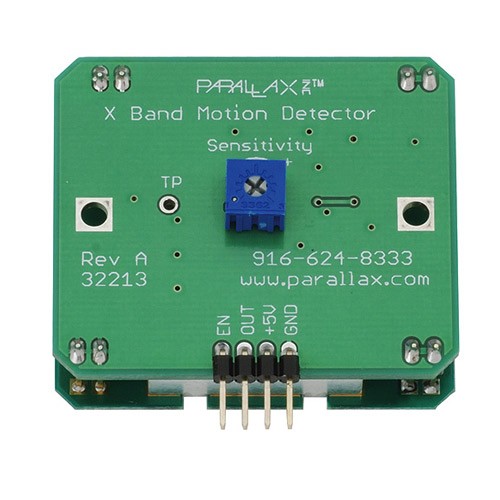
Gunnplexers are becoming scarce in the surplus market, but X-band motion detection is very much alive. X-band detection modules are available for OEM applications, and fortunatelly, Parallax has a unit based on this module available for $34.99.
Gunnplexers are becoming scarce in the surplus market, but X-band motion detection is very much alive. X-band detection modules are available for OEM applications, and fortunatelly, Parallax has a unit based on this module available for $34.99.

diy Quantum Physics was featured in Make Magazine, Volume 31: Punk Science (page 76).

We were interviewed by the Jewish Exponent and featured in today’s edition. Check it out at: http://www.jewishexponent.com/article/26460/FatherDaughter_CoAuthors/
A scan of the printed edition is at: Exponent002
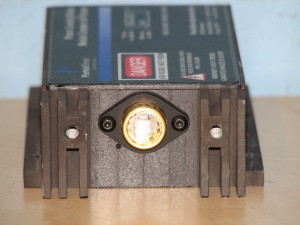 My ongoing eBay search found a number of Perkin Elmer SPCM AQRH-12 units. Two are listed for $499 (buy-it-now) as working, one for $199 as “parts/repair.” I have no connection to seller.
eBay auctions: 230835435238, 230835438679, and 320959423052 (parts/repair).


Harvey Summers called my attention to a miniature electron accelerator that was built for an exhibit at the Trocadéro’s Gardens in Paris, France. The device is an exhibit that was shown to the public for the first time during the CNRS exhibition “Entrée en matière” in November 2011.
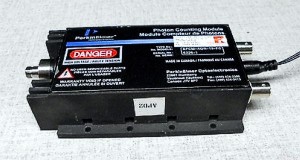 Today I found two Perkin Elmer SPCM-AQE-13-FC SPCMs for sale on eBay at $400 each. eBay auction numbers are 280877451350 and 280877453169. I am passing along this information in case that blog readers may be interested. I have no connection whatsoever to seller.

We just came back from the USA Science & Engineering Festival in Washington DC, where we had the pleasure to meet fellow diy Science authors Theo Gray (Mad Science, The Elements, Popular Science’s Gray Matter, etc.) and William Gurstelle (Backyard Ballistics, Whoosh Boom Splat, The Practical Pyromaniac, etc.)


Image Credit: Images Scientific Corporation
Images Scientific Corporation just announced a new Geiger counter wand base provides a stable platform to hold the Geiger counter wand for experiments. The physical dimensions of the holder are 2″ wide by 12″ long. The length of the sled has markings in both metric and imperial.
The sled isotope holder provides a stable and moveable platform for radioactive isotopes 1″ diameter discs. The sled isotope holder is available in two sizes: One that holds 1/8″ thick discs and the other to hold 1/4″ thick discs.
When used in conjunction with the Sled isotope holder a number of nuclear experiments may be performed such as the Inverse Square Law of radiation, half life, shielding effects, etc.
 Someone (I don’t know the seller) is selling brand new Perkin Elmer C30902E Silicon Avalanche Photodiodes on eBay. Auction number: 200747161278.
These are NOT chilled by a thermoelectric cooler, so their internal noise may be too large for experiments with entangled photons unless you rig some sort of external Peltier element to keep them chilled. However, if you are developing a SPCM, using $91 SPADs during debugging is a lot better than frying $1,000 TE-cooled SPADs.
 We had a very nice book presentation and discussion last night at Barnes & Noble in Marlton, NJ. Quite a few curious shoppers stopped by while Shanni presented a lecture on diy Quantum Physics. Thanks to our very few, but very loyal fans 🙂 Continue reading
 We have been invited by Barnes & Noble in Marlton Circle to their Educator’s Night to lecture on “Do It Yourself Quantum Physics”:
 Today I received an UltraFire WF-502B UV flashlight advertised as emitting at 365 nm. I was wondering how to tell if it really does, especially since vendors commonly list it as emitting 365-400 nm.
Well, I was in Canada last week, and had $25 Canadian left over in my wallet, so I tried this flashlight and compared it to the fluorescence produced by an Inova X5MT-UVT 400 nm flashlight. Much to my surprise, the 365 nm UltraFire caused fluorescence that did not show up at all under the Inova 395 nm flashlight. Continue reading

 Yesterday, Friday, March 30th, 2012, NPR’s Science Friday had its yearly April 1st “No Joke: Science Is A Laughing Matter” program. Want to hear a joke about sodium hypobromite? NaBrO! Can science be the butt of a good joke? Ira Flatow and guests test the hypothesis in an annual April Fools’ joke-a-thon. They share the best gags in the business. Sidesplitting or groan-worthy? You decide.
Program announcement in NPR’s Archive:
http://www.sciencefriday.com/program/archives/201203301
Download mp3 of the show: http://www.podtrac.com/pts/redirect.mp3/traffic.libsyn.com/sciencefriday/scifri201203301.mp3